34. ਓਹੀ ਕੁਝ, ਜ਼ਰਾ ਫਰਕ ਨਾਲ਼। First Reboot
ਚੇਤਾਵਨੀ
ਆਪਣਾ ਦਿਮਾਗ ਆਪ ਠੀਕ ਕਰਨਾ ਇਕ ਗ਼ੈਰ ਕਾਨੂੰਨੀ ਅਰ ਗ਼ੈਰ ਜ਼ਿੰਮੇਦਾਰਾਨਾ ਕੰਮ ਏ। ਸਿਰਫ਼ ਪੇਸ਼ੇਵਰ ਟੀਵੀ ਠੀਕ ਕਰਨ ਵਾਲਿ਼ਆਂ ਤੋਂ ਹੀ ਠੀਕ ਕਰਵਾਓ।
-ਜਨ ਹਿਤ ਚ।
"Come early if you can, or we will have to close the kitchen for good. I called many, but didn’t have a response. Come iਨੂੰ you can, I am working alone. Come via back door."
ਮੈਂ ਨੱਸ ਕੇ ਗਿਆ, ਪਰ ਸਿੱਧਾ ਅੰਦਰ ਜਾਣ ਦੀ ਬਜਾਏ foodbank ਦੇ ਪਿਛਲੇ ਬੂਹੇ ਮੁਹਰੇ ਬੈਠੇ ਝੋਲਾ-ਚੁੱਕ ਵਿਦਵਾਨਾਂ ਨਾਲ਼ ਕੁਝ ਦੇਰ ਸਰਕਾਰ ਤੇ ਤੀਮੀਆਂ ਬਾਰੇ ਗੋਸ਼ਟ ਕੀਤੀ, ਅੱਧੀ ਕੁ ਸਿਗਟ ਪੀਤੀ ਤੇ ਸੀਟੀ ਮਾਰਦਾ ਪਿਛਲੇ ਬੂਹਿਓਂ ਅੰਦਰ ਜਾ ਵੜਿਆ।
Someone is knocking on my door agitatedly. Bang-bang-bang! Speak motherfucker! Shout, announce yourself. What do you want from me? Can’t you see, it’s a fucking wall? Banging your head on the wall? Why mine? What can I do about these fucking portals, these walls and doors when the city is full of such demented degenerates?
One cannot see through a wall, but through a door or a window when one wishes to. Clever. I have two doors opening to the street. A wooden one (you can’t see through it) and one made of mesh through which you can see but with a desired distortion. I am walking in circles in this room, like I have done most of my life, sipping tea now cold cold and grey, that I made myself a few hours ago. I walked across the room to put the cup on a table in the corner. I saw a glimpse of a shadow which sieved through the mesh door. I didn’t look at it directly but I had lived in the shadow of this fear all my life. It’s here now. A hundred needles pierced my face while my legs started to drift like they were made of clouds. I thought no one could see me inside this imaginary castle made of bricks and mortar. I was found. The dreaded guest knew what or who was inside.
ਮੈਂ-ਨੂੰ (ਮੈਂ-ਕੋ । ਮੈਂ-ਕੁੰ । ਮੈਂਨੂੰ) ਆਪਣੀ ਨਵੀਂ ਸੋਚ ‘ਤੇ ਰਤਾ ਹੈਰਾਨੀ ਹੋਈ। ਸਮਾਂ ਓਹੋ, ਲੋਕ ਓਹੋ ਤੇ ਭਾਂਡੇ ਵੀ ਓਹੋ। ਜਿਵੇਂ perspective ਚ ਕੋਈ ਤਬਦੀਲੀ ਆਈ ਹੋਵੇ ਤੇ ਇਸ ਵਾਰ ਓਹੀ ਕੁਝ ਥੋੜੀ nudge ਨਾਲ਼ ਹੋ ਰਿਹਾ ਹੋਵੇ। ਜਿਵੇਂ ਅੱਜ ਮੇਰੇ ਸਾਹਮਣੇ ਹੀ ਕੁਝ ਕੀਤਾ ਆਖਿਆ, ਕੁਝ ਹੋਰ ਜਿਹਾ ਬਣ ਗਿਆ ਸਾ।
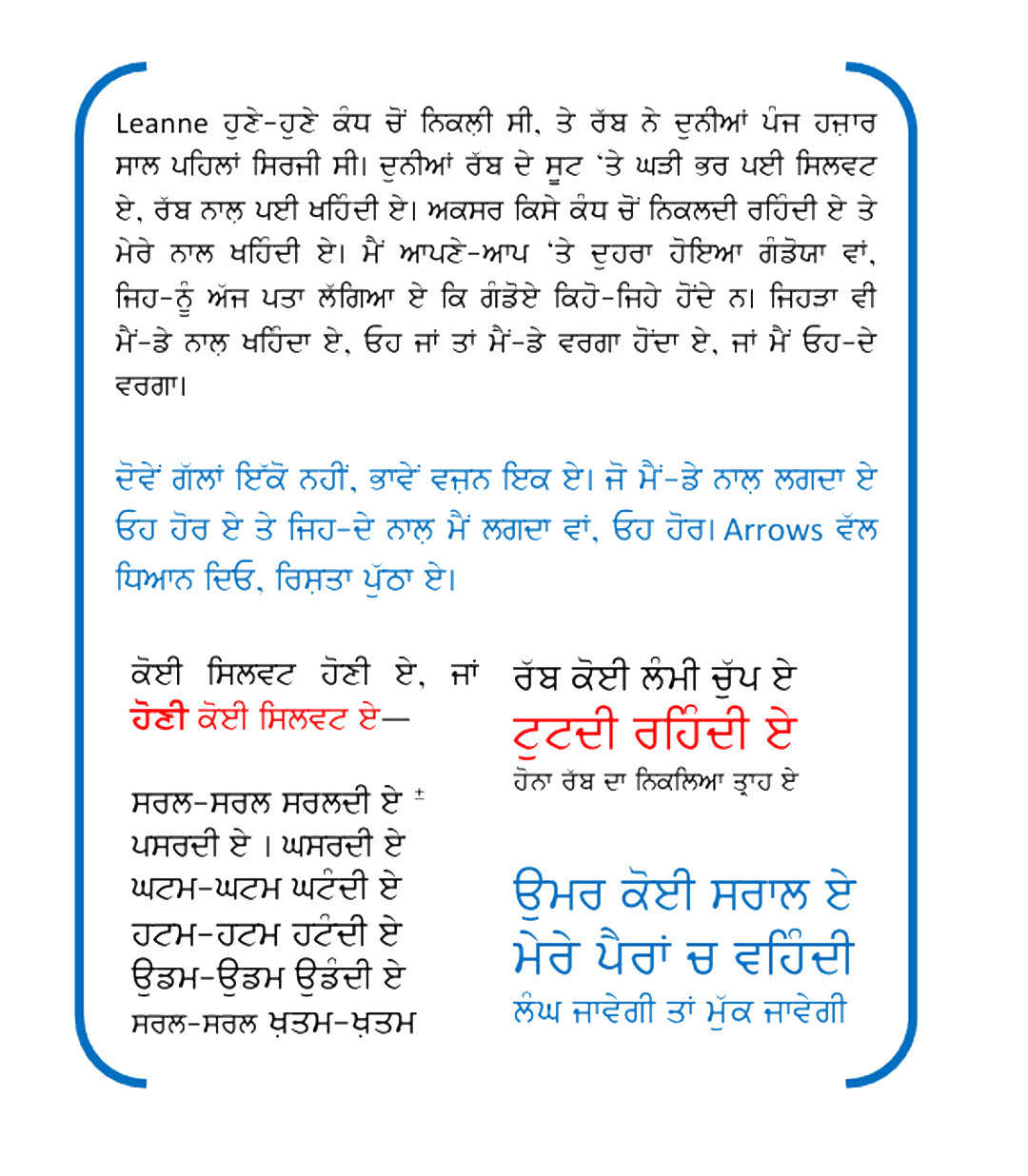
ਇਸ ਨਵੀਂ ਮੁਹਿੰਮ ਚ ਮੇਰੇ ਟੱਬਰ ਵੱਲੋਂ ‘ਮੇਰੇ ਦੁਆਰਾ-ਮੇਰੇ ਭਲ਼ੇ ਲਈ’ ਕੁਝ ਨਵੇਂ ਨਿਯਮ ਜਾਂ rules ਬਣਾਏ ਗਏ ਸਨ। ਏਨ੍ਹਾਂ ਨਿਯਮਾਂ ਦੀ shorthand ਚ ਲਿਖੀ ਇਕ ਪਰਚੀ ਮੇਰੀ ਪਿਛਲੀ ਜੇਬ ਚ ਪਾਈ ਗਈ ਸੀ, ਤਾਂ ਕਿ ਮੁਸ਼ਕਿਲ ਸਮਿਆਂ ਚ ਮੈਂ ਇਹ ਨੁਸਖੇ ਪੜ ਸਕਾਂ। ਪਹਿਲਾ ਨੁਸਖਾ ਸਾ- ਅੱਜ ਵੀ ਕੰਮ ‘ਤੇ Leanne ਨੂੰ coffee ਲਈ ‘ਨਹੀਂ ਪੁੱਛਣਾ’। ਬਾਕੀ ਦੇ ਮੈਂ ਪੜ੍ਹੇ ਨਹੀਂ। ਮੈਂ ਅਜੇ ਵੀ ਪੂਰੀ ਨੀਠ੍ਹਾ ਰਖਦਾ ਸਾਂ ਕਿ ਹੋ ਸਕਦੇ ਏ ਬਾਰੰਬਾਰ ਪੁੱਛਣ ਨਾਲ਼ ਹੀ ਗੱਲ ਬਣਦੀ ਹੋਵੇ?
This fragment begins after the attempted “repair” of the narrator’s mind. The world appears unchanged — the foodbank, the kitchen, Leanne, the dishes — but something small has shifted. The same scene returns with a slightly different angle, as if reality has been adjusted rather than replaced. Notice how the narrator does not become a new person after the reboot. His desires, habits, and misunderstandings remain. What changes is the relationship between what happens and how he receives it. A forgotten name, a gesture, and an ordinary greeting become opportunities for a different reading of the same moment. The fragment plays with the possibility that perception itself is a kind of editing. The narrator’s “family” inside him has created rules to protect him, but even those rules cannot fully control desire. The old question remains: should one correct the story, or continue living inside its uncertainty? Here, repetition becomes transformation. The same kitchen returns, but the narrator is slightly displaced from his previous self. The fragment asks whether change comes from altering reality, memory, or simply the way one looks at what was already there.